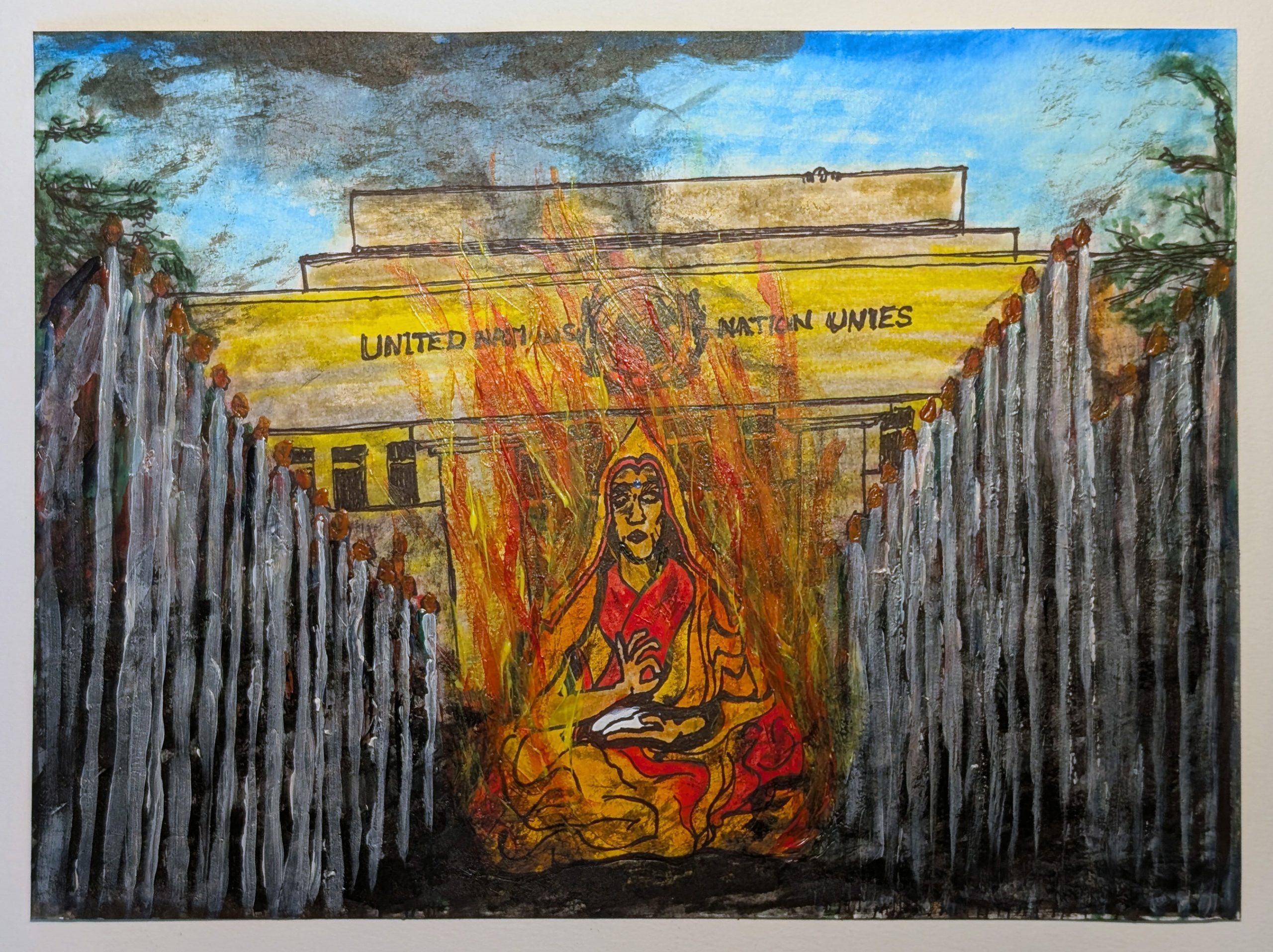
9×12, pen and ink, watercolor brush pen, acrylic
I don’t paint with acrylic on anything but models, usually. Made an exception here. I wanted the fire to have weight — not a wash you can see through, but something with mass, like it was actually built out of something. Pen and ink first, color wash over that, then acrylic for the highlight and shadow work. Pen and ink alone couldn’t carry this one. I’ve got a stack of the acrylic sitting around anyway. Might keep experimenting with it.
I didn’t meander to this design. When I heard what happened, I could picture it immediately. The image of Thích Quảng Đức on the cover of Time has been burned into my mind since I was a kid — everyone who’s seen it carries it the same way. I’ve followed the Sage of Tibet for better than 25 years now, and a good chunk of my study of Buddhism has gone into Tibet specifically: its people, its exile, the genocide happening to it in slow motion while the world finds other things to look at. So when I heard, I already knew what I had to draw. It hit me. I didn’t go looking for it.
Look at what’s actually ringing him in. Those aren’t fence posts — they’re the UN’s own flagpoles, the ones that stand in that plaza every day, member states lined up shoulder to shoulder. From where I’m standing, that’s not a backdrop. That’s the cage. He sat down in front of the one body on earth built to represent every nation on it, and what surrounded him wasn’t Chinese police or American indifference — it was the poles of the nations that are supposed to stand sentry. Over Tibet. Over Palestine. Over every place being quietly erased while the people with the power to say something calculate what it costs them to say it. The building behind him is flat and pale and administrative. It doesn’t flinch. The flagpoles do the work the building won’t — they hold him in place while he burns in front of it, and their silence in that moment says everything the UN charter doesn’t.
I didn’t want to draw him screaming. I drew him seated, hand raised, face steady — because that’s the part that matters to me. He wasn’t consumed by that fire. He was speaking through it. In the old telling, a bodhisattva makes a vow not to leave suffering behind — to walk back into the realm of hungry ghosts on purpose, burning right alongside everyone still stuck there, because leaving would mean leaving people behind. That’s what I see when I look at what he did.
Mu doesn’t answer the question. It dissolves it. He wasn’t answering China. He wasn’t answering the UN. He was refusing the entire premise that this could keep being debated instead of ended.